
Who remembers the feeling of waiting for a new music video to be released? It used to be an event — almost as exciting as going to the movies. Okay, no red carpet involved, but still something you waited for. These were moments you made time for, moments that invited attention and presence. Those days feel far away now. In an age defined by speed and constant scrolling, videos are consumed in seconds and skipped the moment interest fades. What was once celebrated has become fleeting.
Against this backdrop, it feels meaningful when an artist still chooses to invest care, time, and belief in the music video as an art form. With Scenes, Sound of Fractures does exactly that – not out of nostalgia, but as a conscious decision to slow things down.
“Not everything meaningful has to justify itself through metrics.” The video for Scenes emerged from an ongoing, trust-based exchange with director Helena Ausgang, produced by hiersoir.tv, rooted in shared cinematic references and a mutual appreciation for an era when music videos were allowed to breathe. “We shared a love of 90s and 2000s music and the music videos of the time , directors such as Michele Gondry, Chris Cunningham and Spike Jonze, and spoke at length initially just as fans of music and art.”
In our interview, Jamie reflects on questioning the role of cinematic music videos today, on letting go of control, and on choosing depth over speed. It is a conversation about trust, restraint, and why creating space — for both the viewer and the artist – still matters.
header photography by Jackson Ducasse
Welcome, Jamie – so lovely to speak with you. Where are you right now, and how are you today? Are you enjoying the Christmas days?
Thank you, it’s lovely to speak with you too. I’m at home right mostly, trying to actually slow down for once. Christmas has always been a good excuse to step away from the constant output mindset and be present with my family. I think I’ve realised how rare that feeling is now, not feeling like I should be posting, releasing, or optimising something. It’s been grounding in a really necessary way.
The idea for your new video Scenes began through Instagram conversations with Helena Ausgang. How important is that kind of organic, trust-based dialogue for you when it comes to creative collaboration?
It’s everything. I’ve learned that the best collaborations don’t start with strategy or expectation, they start with curiosity and shared taste. The conversation with Helena felt very natural. We weren’t talking about deliverables or outcomes; we were talking about films, references, memories, and why certain visuals stuck with us growing up.
A lot of visuals today are made for quick consumption. This video asks the viewer to slow down. Who were you making it for, and how did that influence the final result?
I was making it for people who are looking for more depth, fans of the music and moments I miss now that social media has everyone feeling overwhelmed by noise, choice, and speed. It’s about creating friction as a way to find the people who care about your niche. I think we’re all learning now that quick likes aren’t of high value to us, so we’re trying to find the people willing to stay to the end, the ones who might stay and look for more. I’m also working on an exhibition and live show for next year, so I know that the visual elements of the project will get to live on in physical spaces too.
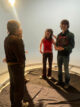
“The best collaborations don’t start with strategy or expectation; they start with curiosity and shared taste.”
You’ve spoken openly about questioning whether cinematic music videos are still “justifiable” today. What ultimately convinced you that this was still worth making?
I think it was the realisation that “justifiable” is the wrong word. Not everything meaningful has to justify itself through metrics.
What convinced me was the feeling that this song, and this project, deserved a visual language that matched its emotional weight. If something feels important to you, sometimes that’s reason enough. I’ve learned to trust that instinct more, even when it runs against the logic of the attention economy.
We’re constantly surrounded by noise and information, and it doesn’t seem like this will slow down anytime soon. Do you think this spiral will continue indefinitely?
The noise will keep growing, yes, but I don’t think our desire for meaning disappears alongside it. If anything, it intensifies.
What changes is how people respond. Some will keep speeding up, but others will actively seek quieter spaces, smaller moments, and deeper connections. I think we’re already seeing that split happen. My work exists very consciously on the slower side of that divide.
How important was trust within the team on this project?
Essential. This was one of the first times I wasn’t involved in every single creative decision, and that required a lot of trust, not just in the director, but in the process itself.
Trust allowed everyone to do their best work without fear. It meant I could let the project surprise me, rather than trying to control it. That’s rare, and I don’t take it lightly. And honestly, I found it really hard!

“Connection, in the simplest sense, is what matters most.”
Scenes is the final track on your debut album. Why did it feel right for the video to come at the end, not the beginning?
It felt like a signal of my values, I guess; that great art matters and that albums can continue to grow and connect with new people in new ways. We move on so quickly now. The Spotify / Fred Again–style model of music as content has pushed the industry into fast, forgettable release cycles. There are still big moments, of course, and emotional connections with fans, but they don’t revolve around songs in the same way we’re used to. There’s not time to let things breathe and grow on you.
Releasing the video at the end felt honest. For me, it felt like a moment of growth for the project into a new medium, but also a signal of intent as an artist, about the things I care about.
When you step back from music and everyday pressures, what feels like the most important thing in life to you?
Connection. In the simplest sense.
Time with my family, honest conversations, moments where nothing is being documented or repurposed. Those are the things that refill me. And ironically, they’re also the things that make me want to create again, just from a healthier place.
Thanks so much for sharing your world with us!
Thank you for the thoughtful questions, it really means a lot to be able to talk about the work in this way. (smiles)

Follow Sound of Fractures for more:
www.instagram.com/sofractures
www.facebook.com/soundoffractures
x.com/sofractures
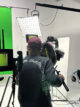
Production: Hiersoir, Executive Producer: Yoel Servadio, Line Producer: Baptiste Archimbaud, Production Coordinator: Eva Le Gaffric, Producers: Caroline Hélaine, Anne-Cécile Jemin, Executive produced and funded by: C.Y. Lee, 1st AD: Quentin Dubourdieu, VFX: Leopold Wu, Casting: Marie Levy, Cast: Syrine Verroust, Bikke Soukkan, Casper Hauge, Lane Heatherington, Director of Photography: Edouard Legrelle, Editor: Florian Julia, Colorist: Nicolas Gautier, Stylist: Morgan Rouchausse, Make Up: Donia Ben Najeh, Art Director: Gaston Portejoie, 1st AC: Hugo Bottin, 2nd AC: Clara Guizard, Gaffer: Gaetan Vote, Spark: Aurélien Henry, Key Grip: Jean Le Gouill, Grip: Noah Villemeur, Location Manager: Sophia Ben Ouali, Location Manager Assistant: Foucauld Bayle, Audio Mastering: Emre Ramazanoglu, Special thanks to: Caspar Louis, RVZ, Madison César Roussel, BBCAR, Heroes Studio