
“When you never fully belong, you become an outsider. You observe more than you participate,” says singer, songwriter, and multi-instrumentalist Delphine Lucy Lam. “There is a kind of freedom in that, but you also lack something essential, like community or a sense of grounding… so you create something out of it, through a careful balance between pragmatic observation and daydreaming.” These feelings might be familiar to many – they definitely are to me. There is something comforting in reading that there are people who feel the same, and even more so, in seeing something beautiful grow out of it.
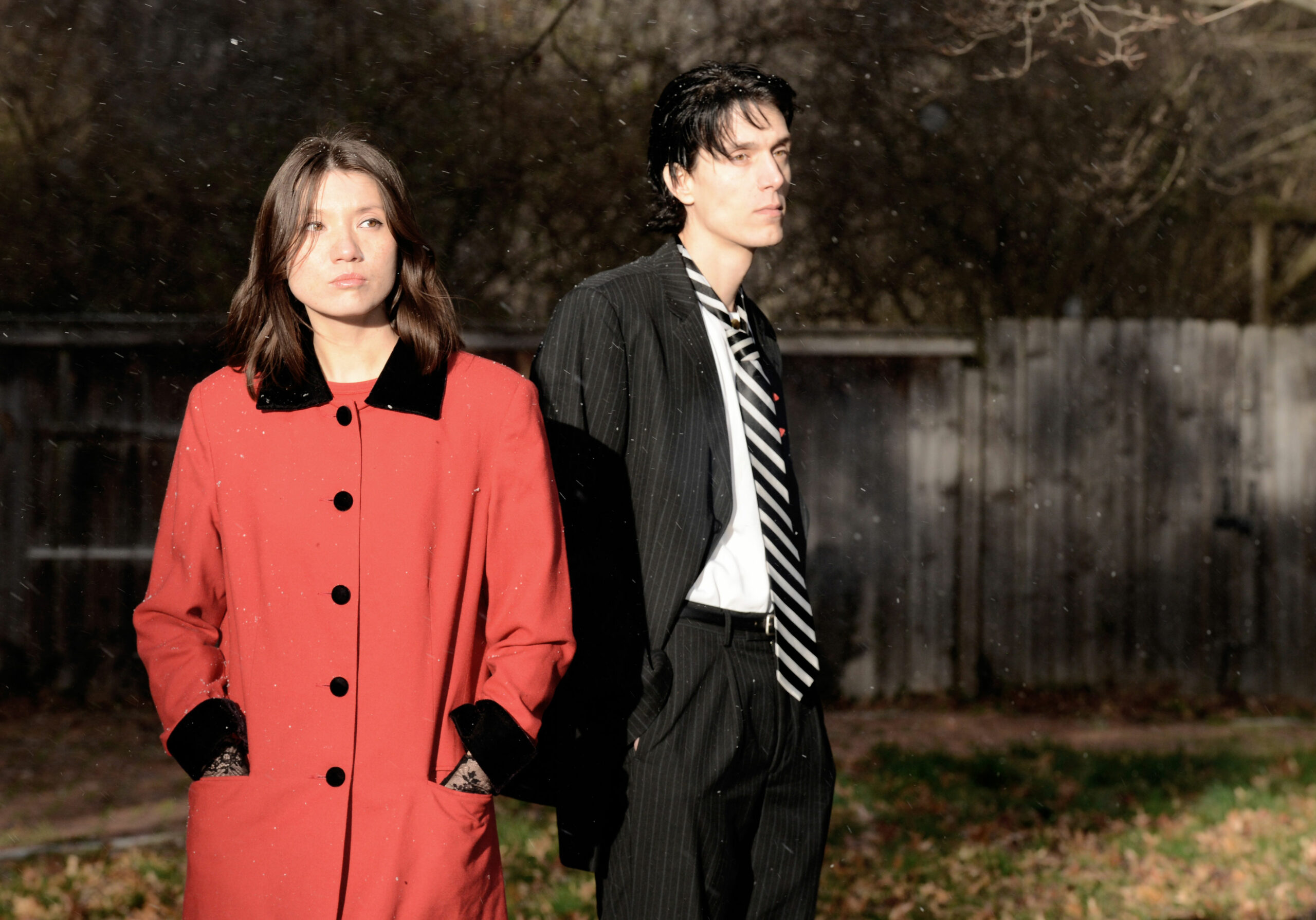
The French duo Fleur Bleu·e, formed by Delphine Lucy Lam and Vlad Swann, moves within this in-between space. Their sound feels like a meeting point of different times and textures – dream pop, shoegaze, fragments of alternative and new wave – blending into something that carries both a sense of the past and clarity.
Their new single “All the Little Beings” captures exactly that feeling. It’s a gentle, nostalgic piece that reflects on the invisible life of spaces – the traces we leave behind, the memories held within walls, materials, and moments.
We spoke with Fleur Bleu·e about the story behind the track, the raw and intuitive video, and the feeling of navigating the world as both observer and participant.
Let’s start with a quote from you: “We’ve always felt like foreigners, and within this music we explore as observers in a daydream state.” I really connect to this feeling myself — often feeling like a stranger in this world, not fully belonging, having my own thoughts, seeing things differently, sometimes not being able to relate. How can we imagine this feeling for you? What does it mean in your everyday life?
D: This quote is important because that feeling, and the way we deal with it through music, is what brought us together in the first place. Growing up in France as third culture kids, it was really hard to fit in, to feel truly “French”. It’s also why we had to leave, psychologically. France can be very hegemonic and conservative when it comes to culture and social, symbolic capital.
So since I was a kid, I always knew I would move abroad at some point, maybe to come back to it later in my life. It took some years as it is not that easy. Now, as we followed a series of signs from fate, we ended up settling in the middle of Pennsylvania, which is quite far from our previous Parisian life.
In everyday life, wherever we are, the performative acts at work and in our social life take a lot of energy. For a long time we thought it came from our backgrounds, being mixed and in-between, but now we also feel it might be linked to some neurodiversity and complex traumas.
When you never fully belong, you become an outsider. You observe more than you’re inside. There is a kind of freedom in that, but you also lack something essential, like community or grounding, and that can affect your sanity. So you create something out of it, through a measured balance between pragmatic observation and daydreaming. That’s what we’re doing with Fleur bleu·e, I believe.
You came together in 2019 — how did it all begin between you?
V: Shortly after we met we realized that we both had had the dream to form a serious music project and that we shared common musical tastes, which is quite rare. We decided to get together with our instruments and make some music. We played for three hours in Delphine’s small Parisian room, Delphine on her cello and me with a guitar, and it was such a magical moment. We came up with beautiful melodies, which would eventually become songs on our first album, like Waterfall Spring, and both realized that there was a really unique connection between us. We spent the whole week after listening to the jam we had recorded on our phones and we just wanted to play music together again. We continued jamming regularly like that, without properly recording or formally launching a project, and it was only in 2020 during the first lockdown that we recorded and launched the music project officially.
D: We met the year before at a friend’s show in Paris, V was still living in LA and he was coming for his PhD data in France. He came to see me perform in a restaurant at a Vietnamese Festival and we kept in touch. I came to visit him in LA and we started to jam super naturally. A long time ago I wrote a song, “sun”, from a dream I had of our encounter. In my dream, we were walking on a pier in a place that strangely looked like California. I could feel the warm touch of the sun on my skin. I still believe it was V I met then.
“You can be sad — it’s part of a larger process called life, and also part of its beauty.”
What has changed over the years in your collaboration, especially in the way you create music together? (smiles)
V: With the time passing we unfortunately have fewer moments to spend together, so the process became a little more scattered, like a ping pong. For example, Delphine would record a song of hers on her side, and I would then work on it on my side, adding layers and my own interpretations to it. But we still get to catch these moments to play together and write spontaneously by seizing the inspiration in the air. All the Little Beings is one of those songs that came out of these moments where everything was created together in symbiose. It’s truly magical when that happens.
“All the Little Beings” turned into such a sweet, nostalgic track. Can you tell us a bit more about the story and feeling behind it?
V: It was an evening, we were packing to move out of our tiny Parisian apartment and Delphine asked me “how many beings do you think there are in this room with us?”. We had a mouse living in our kitchen so I thought she was talking about her and I answered “three”, counting us and the mouse. But then, she explained that she was actually thinking of all the souls that were encapsulated in the elements. The trees in the wooden floor and furniture, the fish and shellfish that became fossils and eventually were turned into sand to make our concrete walls, but also the bacterias and the dust mites. I think that this conversation turned our inspiration on because I then started playing my guitar and the first thing that came out was this ping pong riff that makes the song and Delphine immediately started singing the verses of the song with this syncopated rhythm that I thought was so catchy and groovy at the same time.
D: Out of nostalgia, I wanted to absorb the “essence” of this place, to recognize it and to remember it. It’s about all these invisible little beings that inhabit a place you’re connected to, about the memories inside matter and how you contribute to it as a living organism with your own soul. It’s very spiritual: what constitutes matter and the soul, and how do they interact?
The video feels very raw — did it come from a clear story idea, or did you let yourselves be guided more by the emotions of the song?
D: It was very improvised, and as raw as it feels. We filmed while leaving our empty apartment in Paris, right after finishing the move-out inventory. We had just recorded the album and were about to leave France for the U.S. The moment really resonated with All the Little Beings which is about moving out of a place filled with memories and souls, these little beings. In the chorus I sing “Here last the last days of a scene made of our years. Here lie the lost ghosts of the skin made of our souls”. Vlad was overwhelmed and started crying. I decided to capture that moment, almost instinctively, both to keep it for ourselves and to create something raw that we might use for the song later.
V: We did not really plan it ahead. What happened is that we had moved out (again) of our apartment and I was so sad about it. We had so many great memories there, and I was afraid that I would lose them by moving out. I was so nostalgic that I had kept a double of the keys just as a spiritual token to make me still connected to it. Later that day, we had to go back to pick up a few things we had left to our neighbor and just because I could not resist, we decided to get back inside for one last time. That’s where we had the idea to shoot ourselves in this empty place that did not feel like ours anymore. I was not 100% sure about using it as a music video. But Delphine came up with this artistic way to edit and put the image together, that was so refreshing to me, and I loved it. Had we planned things more, the video might have been slicker but I think that we would have lost this spontaneous mood that fits the song well.
Leaving a place often means leaving parts of yourself behind. Do you feel that this song helped you process that in a different way?
V: Well the shooting for the music video in our empty apartment definitely helped me process the move. I felt so much better after the shooting.
D: I feel I’ve moved so many times that I’ve become a bit numb about it. I still have a good feeling of nostalgia when I leave a place, one I like that makes me feel connected to my reality. The song reflects my mentality about leaving things behind. You can be sad, it’s part of a larger process called life, and it’s also part of the beauty of it. Letting go of things and places, and maybe parts of yourself, but still feeling them deeply inside you. It is a rebirth, a new start and a place for hope. Of course, it is not as hard as leaving humans for me.
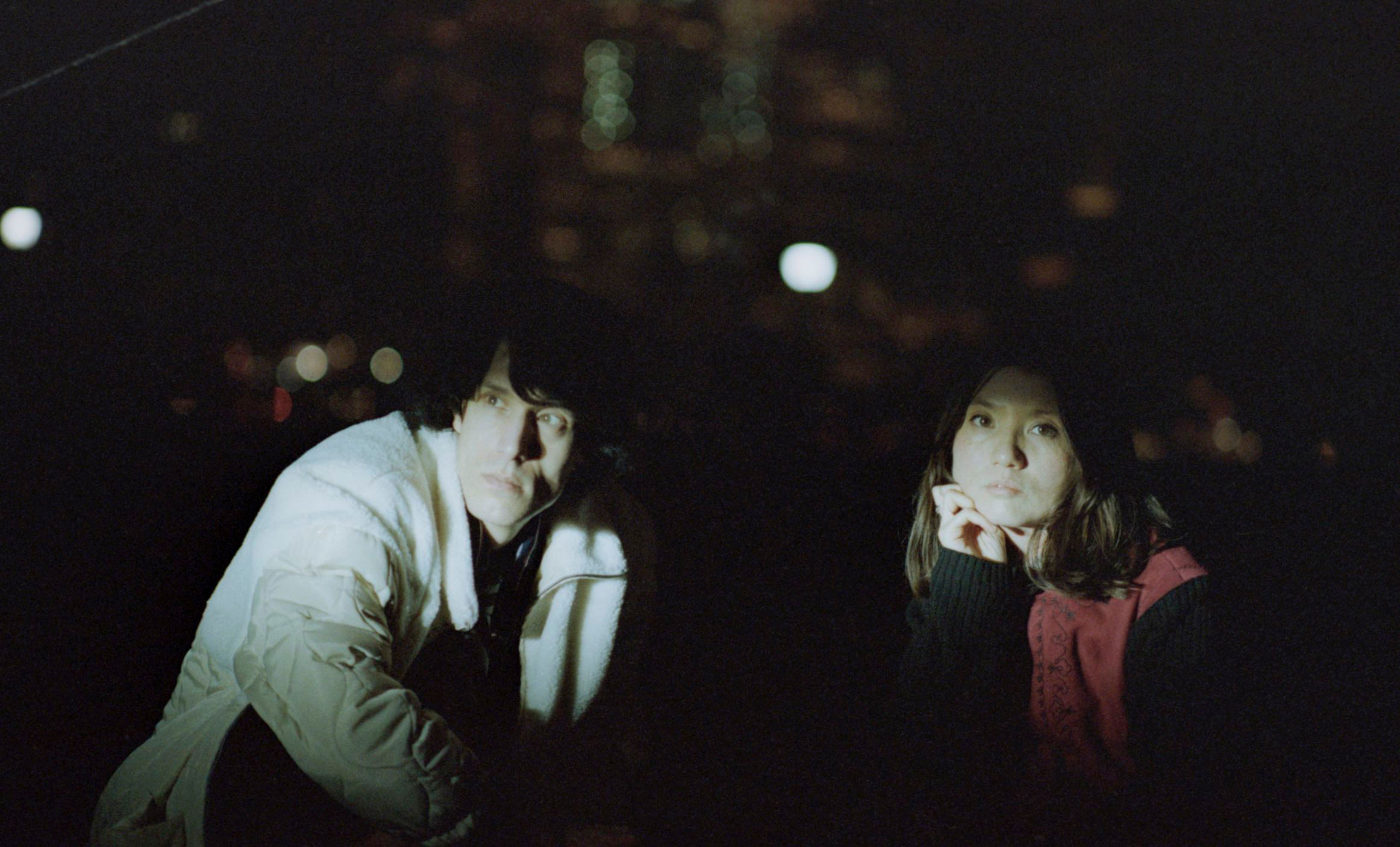
“We always try to catch beautiful and unique melodies that float in the air.”
There’s something almost spiritual in the way you describe materials — wood, sand, walls — as if they hold memory. Do you believe places absorb the lives that pass through them?
D: I’m happy you felt it. First, I believe a place is what it is materially. It’s a big mixture of many different materials, an accumulation of matter and lives, microscopic or not. And yes, in a way, I believe that the material world holds something we cannot see but we can definitely feel. Maybe it’s the soul of past lives, the trees that are in your floors and doors, in your roof framing, the sand in your walls, or the past tenants. I’m an architect, so the materials and their origins are something I’m very conscious of when I experience a space.
V: I definitely think that places absorb lives. So many times I imagined the lives of the people who had lived in our flat before us. I would project the place in the past and get to sense the mood. There is a funny story about that, just about when we moved, our neighbors told us that the person who had lived in our apartment before us was actually the original tenant who was born in it in 1929. You hear that and then all what you had imagined takes an even greater perspective and you feel like you knew this person and their life.
Your second album „Question Marked Upon The World“ is also on the way — what can listeners expect?
V: I think that our sound has grown in multiple dimensions. We have experimented with new sounds and instruments. We also worked on texture, to stretch it towards a more raw dimension at times, and more intimate at others. Our signature is still there, which in my sense is that we always try to catch beautiful and unique melodies that float in the air.
D: We were even less scared to go for pop melodies, the ones from the 60s and their 90s’ revival that I cherish, but with our own vibe. In our musical age, music has centered more around textures than complex melodies, because of technology and the will to explore new territories. But I’m a melody lover, so I want to say: “more melodies, not less textures”, like in our first album.
I would rather say that if, in our first album, “Unrequited love” we were like broken-hearted teenagers that talked about this feeling of not belonging, now we are a bit more “mature”. Question Marked Upon The World speaks about the world, as unfair and beautiful as it is, and we explore ways to (re)connect to it malgré tout.
You recorded the album at Studio Murmure in France, which had just opened. Did this environment influence or inspire you in a special way?
V: We spent quite some time with David Bouhana and Franck Lobielti there between April and July 2025. They are located in a basement in the heart of Paris’s “indie” neighborhood, and a day at the studio would always put us in a great mood. At the beginning we were just supposed to polish and mix the demos we had recorded in our home studio. But they pushed us to record over most of the tracks we had, with real amps and vintage mics in order to give the best shot to the songs. This also gave us time and space to enrich some parts of the songs, notably with backing vocals and we worked a lot of overtime hours. It greatly benefited the quality of the sound of the album.
Delphine, I’ve read that your Chinese name means “the fire bird reborn from its ashes.” Do you feel connected to that idea of constant rebirth?
D: Totally. It was given to me by my Popo, my grandma from Mauritius, before she died, as I was the first granddaughter of my generation. It symbolises the continuity and rebirth of the family. It’s one of the few concrete pieces of Chinese, Hakka heritage I can grasp. Apart from my strict education with strong Confucian values, I don’t have many things that feel Chinese. But this name resonates a lot. I feel a constant urge to go further, to explore, to discover territories that are untouched and off the common paths. I’ve survived many things and had no choice than to be reborn. I have nomadic ancestors on both sides of my family, European and Asian, so it’s kind of in our DNA. They were not scared to explore the world for a better life. I am very proud of it, even though I don’t have access to their stories.
And as a last question — what feels most important in life to you right now?
V: My honest answer would be World peace and the end of suffering. Unfortunately the news has become the thing that most impacts my mood. I am so sad to feel like we are going backwards in history and that so many innocent lives are taken by cruel wars. The origin of all that are social networks and how they have been tweaked to favor extreme opinions with complete disregard of the truth. So I would say that the most important thing to me would be to find ways to reign in all these.
D: I’m going to put it as a wish list: More justice, more empathy, less performative acts. No more anti-foreigner, anti-poor, racist wars. Use rage for the better. Laws that serve the people, marginalized communities, and the commons as a priority. Growth and a chance for everyone, even in the darkness. Faith in the impact of social policy and creation. Radical empathy for all life and nature. No privatization, no billionaires. We should all be rich on Earth. And the message of our album: to never lose connection with this world, as incomprehensible as it can be.
Follow Fleur Bleu·e for more:
www.facebook.com/Fleurbleu.eduo
www.instagram.com/fleur.bleu.e
fleurbleu.eu