
With our series “An artist’s life.” we want to share the stories of the people behind the art.
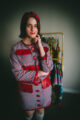
For this edition of our Artist Life series, we step into the world of Kaylie Caswell, a multidisciplinary artist working across music, visual art, and fashion. She is the founder of House of Caswell, a limited edition fashion project translating original artwork into wearable form. She is also the bassist in the genre-blending band Berried Alive.
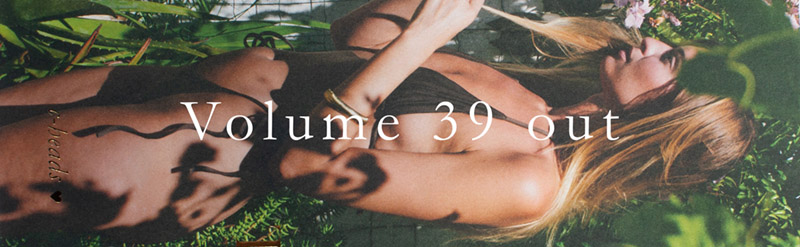
header photography by Charles Caswell
From Song to Still Life
By Kaylie Caswell
The first version of the Still Life collection wasn’t clothing at all. It began as lyrics I wrote years ago for a song about life becoming stagnant — literally a still life. At the time, I had no idea that the song would eventually turn into a painting, and that painting into an entire wardrobe.
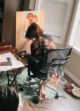
I wrote the song, my husband added his guitar parts, and we hired a harmonica player to record the melody I had written. When it came time to release the track, we needed single artwork. I decided to transfer my skills in digital art into the analog world and began taking art lessons, slowly building the skills needed to create an image worthy of a song that meant so much to me.
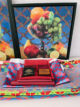
I purchased a Carnival glass bowl from an antique store and filled it with fruit, arranging it carefully around the bowl’s iridescent pedestal. Once I captured the image, I brought it to my art teacher and told her I was finally ready to create my still life — the very reason I had started taking classes with her in the first place.
At the time, I had no intention of starting a fashion brand. I was simply following an image far enough to see where it might lead.
For the past few years, music had been my primary artistic language. I play bass in a band called Berried Alive with my husband, and for years, the act of making something meant sound, rhythm, lyrics, and thinking of fruit puns for song titles. Visual art entered my life out of necessity, initially creating digital pieces intended as single artwork and T-shirt designs, eventually spreading into a full streetwear brand under the Berried Alive name, where every collection and drop was tied to a track or album using the same artwork.
When I first started working in soft pastels, I found myself constantly reaching for an undo button that didn’t exist, but I grew to love the way the medium feels both immediate and fragile. You paint with your fingers close to the paper, and the sensation, for me, is almost the same as playing bass guitar, with all my fingers and thumbs in contact with the strings. It’s so tactile. The way the colors build on one another, layering until the desired effect appears, reminds me of building a song: the bass, mids, highs, rhythm, and melodies all need to find their place without masking or clashing.
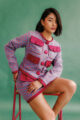
“I wanted the garments to behave less like disposable fashion and more like collected objects.”
That still life painting stayed with me longer than I expected. Instead of remaining a single artwork, it began to unfold. I started digitizing the artwork and playing around with it in new ways, creating a series of repeating patterns, all sharing the same palette of eight colors taken directly from the original artwork. Then I started imagining what it would mean for the composition to move off the page and onto the body. What began as a song about a stagnant life suddenly turned into a storm of ideas that kept me awake at night and filled my days with creative momentum.
As I created and worked, taking these repeating patterns first into 2D CAD drawings of a dream travel wardrobe and then into realistic 3D renderings using CLO3D, the full idea started to form in my mind: what would happen if a single artwork became the source material for an entire wardrobe? Fashion often borrows from art, but I was interested in something more direct. The art and the fashion are inseparable from one another. In many ways, the process felt less like designing and more like translation.
The result eventually became my debut collection, Still Life, and the beginning of my fashion project, House of Caswell. Instead of designing prints in the traditional way, every pattern in the collection is derived from that original pastel painting. The composition was translated, fragmented, repeated, and reassembled across garments. What began as pigment on paper slowly transformed into textiles, silhouettes, and pieces meant to be worn in the world.
Moving between mediums has its own strange rhythm. Each one asks something different of you. Music unfolds in time. Painting exists in a single suspended moment. Clothing sits somewhere in between. For the viewer, it carries the stillness of an image. For the wearer, clothing becomes memory itself. It affects your mood, your confidence, the way you walk, and the way you feel about events that transpire while you wear it.
But the romantic side of creating something rarely tells the whole story.
“The financial risk alone can make you question your sanity.”
Building something from nothing has a quieter reality that most people don’t see, like the months spent selecting fabrics, learning about production, and navigating costs that arrive long before any piece is sold. There is a strange tension between wanting to make work slowly and carefully, while existing in an industry that often rewards speed above all else.
There are moments, to this day, when the project feels impossible to sustain. The financial risk alone can make you question your sanity. Fashion, especially when approached as art, requires a level of devotion that doesn’t always make practical sense. You invest years of work into objects that may or may not find their audience. Doubt becomes a regular companion.
I think every artist knows this feeling, lives with that nagging voice asking whether you’re chasing something meaningful or simply something unrealistic. Whether the world needs another piece of art, another garment, another idea. In a world filled with endless cheap imitations, it can be hard not to wonder whether anyone still cares about garments created with the same attention we give to art.
And yet the instinct to make things rarely disappears.
For me, the thread connecting everything I do is memory. I’ve always been drawn to the way objects, and especially clothing, carry emotional residue. They become small containers for time. The idea behind House of Caswell grew out of that feeling. I wanted the garments to behave less like disposable fashion and more like collected objects — pieces that feel closer to artwork than product. Each one is produced in limited numbers with a certificate of authenticity, like editions of a print, because to me, that’s what they are.
The model I’ve chosen is a slower way of thinking about clothing, and maybe a slightly rebellious one in a culture that moves so quickly, but Berried Alive has always had a sort of punk, DIY mentality, and I’ve carried that over into the House of Caswell.

“I’ve come this far, and I owe it to myself — and to the art — to see where the path leads.”
In moments when doubt creeps back in, I return to the same simple belief, repeating it like a mantra: that art, in whatever form it takes, still matters in everyday life. Not as something distant or precious, but as something lived with. A painting can hang on a wall, and a song can exist in the air, but clothing has the unusual privilege of moving through the world with us.
When I think back to that original pastel still life and the song that inspired it, it feels strange how much grew from a single idea. At the time, I was simply expressing my feelings about how life seemed to be passing me by while I did the same things every day. I never imagined that the image would eventually become an entire collection or a new identity. But that’s often how creative lives unfold.
You follow one idea, then another. A song becomes a painting, which becomes fabric. That fabric is sewn into clothing, and somewhere along the way, you realize you’ve built something that didn’t exist before — not because you had a perfectly clear plan, but because you kept making things long enough to see where they would lead.
I don’t know where House of Caswell will lead. Some days, the doubt feels overwhelming, and I wonder whether I can continue. But I do. I’ve come this far, and I owe it to myself — and to the art — to see where the path leads.

www.houseofcaswell.com
@houseofcaswell
@kayliecaswell