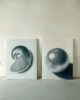

“Simple found objects may seem so ordinary to some but are remarkable to me.” We often rush past the smallest things without a second glance. Renée Levin does the opposite. Her paintings invite us to pause, to notice light, texture and the quiet stories hidden inside everyday objects. Based in Los Angeles, the contemporary artist transforms flowers, shells and found treasures into deeply emotional works that explore memory, time and vulnerability. We caught up with Renée to talk about beauty, stillness, imperfection and why paying attention can change the way we see the world.
photography by Thom Fortune and press courtesy of Renée Levin
Hey Renée! Hope you are well. Your paintings invite viewers to slow down and notice details they might otherwise overlook. Was there a particular moment in your own life when you learned how to pay attention in this way?
I don’t think there was one particular moment for me. I’ve always been hyper-aware from a young age. Painting, though, has magnified that awareness and taught me to move at a slower pace, at least in the studio. It asks you to look closely, to notice the subtle shifts of light, texture, and emotion that are so easy to overlook. Once you begin paying attention, there’s really no turning back. The world reveals itself in a different way. I’m grateful that painting allows me to translate that awareness into my work and allows others to view the beauty of the world as I do.
You once said that an object has to bring you joy before you decide to paint it. Have you ever fallen in love with an object that would seem completely unremarkable to most people?
Absolutely. Simple found objects may seem so ordinary to some but are remarkable to me. For example, the fallen petals of a flower or a wilted bloom, things that would get thrown away, the rejections. There is so much to them: their texture, their form, the shape they take and fill on a canvas, and the way light filters through them, revealing subtleties, are almost extraordinary to me. I recently came across poppy pods that were about to be discarded. I was immediately drawn to them for their sculptural forms, muted palette, and textures. It’s amazing how something that has reached the end of its natural life can still hold so much beauty. I brought them back to my studio, and I can’t wait to paint them.
Many people collect memories through photographs. You collect shells, petals, textures, and found objects. Do you think your studio is, in some ways, a portrait of who you are?
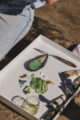
Yes, I would say so. I have been a collector of objects my entire life. It’s the thrill of the hunt, you could say. But when these found objects hold memories and transport you to moments in time, that makes them even more meaningful. My studio becomes almost a living archive of these moments.
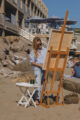
“My hope is that my work grabs the viewer… allowing them to think slower and deeper.”
Your work often feels incredibly calm, yet the process behind realism demands patience and discipline. When frustration appears in the studio, how do you move through it?
I am naturally a problem solver and strongly believe there is always a way to work something out. Whether it is taking a step back or taking a break to regroup, there is always a way to find a resolution without forcing it. Frustration definitely does exist in the studio, but it has become part of my practice. Challenges are always learning opportunities.
In another interview, you mentioned that imperfections often attract you more than perfection. Has embracing imperfection in your paintings changed the way you view yourself outside of art?
Yes. I think the balance of perfection and imperfection is a common thread I see throughout my day-to-day life. My practice has taught me to let go a little more than I used to and, in many ways, has given me permission to do so. It has made me more comfortable with myself and my insecurities.
Growing up with immigrant parents taught you resourcefulness and discipline. Looking back now, what is something from your childhood that you perhaps didn’t appreciate at the time but deeply value today?
I would say a strong work ethic and discipline. Growing up, I don’t think I fully appreciated the way I was raised, but looking back now, I value it deeply. Through observation, I was taught that hard work, perseverance, and determination can make anything possible. This has carried through into my career and my life.
You describe your paintings as spaces for vulnerability. Has a viewer ever shared a reaction or personal story that surprised or moved you?
I have had collectors become very emotional and vulnerable when experiencing my work. I have been fortunate to witness these pure moments in people, and they are probably the most meaningful, the purest form of flattery that I could receive as an artist.
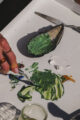
“Something that has reached the end of its natural life can still hold so much beauty.”
Because your paintings celebrate ordinary things, I’m curious: what are some small rituals or everyday moments that currently bring you peace?
Yoga, running, listening to music, and enjoying a good meal all bring me a sense of peace and contentment. But more than anything, it’s genuine, meaningful, deep conversations with people I love or also with complete strangers, who are sometimes the most interesting and the most inspiring!
Success seemed to arrive quite quickly after you became a full-time artist in 2019. How do you personally define success today? And have there been moments of doubt or unexpected challenges behind the scenes that people might not see?
While I am incredibly grateful for the opportunities and recognition my work has received, success to me is being content and happy with the joy life brings. To say that what is considered “work” brings me that joy is a success in itself. It is also about continuing to grow and having the freedom to spend my days doing work that I genuinely love—work that feels honest and meaningful.
Of course, I think doubt is something every creative battles with at times, but I’ve learned to use it as a challenge to propel me forward rather than as a roadblock. Putting things into perspective and focusing on the bigger picture has always been my strategy, blocking out the noise and staying in my own lane. I am also fortunate to have a trusted team and great friends whom I can rely on for support. There is a lot going on behind the scenes—the logistics, the business side of things, and everything that goes into being an artist beyond the painting itself—and it’s comforting knowing I don’t have to navigate the challenges alone.
You often speak about stillness. In a culture that constantly asks us to move faster, do you see stillness as an act of resistance?
These days, definitely. The pace of technological advancements has made it very difficult for society to slow down. I don’t think it is healthy. We have to consciously seek moments of refuge, peace, and stillness, choose to create space for ourselves, and be present. I do think art plays a role in this. My hope is that my work grabs the viewer, holding them and their thoughts and emotions, allowing them to think more slowly and deeply or just simply be.
We’re also sharing some photographs of you in Malibu, and there’s something so beautiful about them—the coastline, the light, the sense of calm. It made us wonder: is there a place in the world where you feel most at home?
I’d say anywhere where I am close to the sea is where I feel most grounded.
Lastly, what is one truth about life that you wish you had known much earlier?
I would say giving myself grace and allowing things to unfold in time, as well as knowing that being uncomfortable and challenged is when the most growth happens. The path is not always linear, but if you stay curious, remain true to yourself, and follow what brings you joy, things have a way of coming together. And I would add: be more spontaneous! Say yes more. Life is for living—and that is exactly what I am doing!