What remains of a person, a place, a shared moment once time has passed? In What Remains, Yael Cohen reflects on the fragile nature of memory — how photographs hold on to moments, how places preserve traces of the people who once filled them, and how remembering itself changes with time. A deeply personal essay about memory, absence, and the ways in which people remain part of us.
words and photography by Yael Cohen
Summer tends to do that, stretch out the days. Daylight lasts longer, the heat grows heavier and denser. It is a time when the flowering in the park takes place, humid days urge us to take our water with ice. Of buzzcut season, of freshly cut grass. Those are days of saccharine dreams, in which nothing much happens at all. New York’s summer temperatures became particularly unbearable that day, so we went to the one place that would deflect it.
Marble is cold. In the presence of statues, it can feel like standing in the middle of a forest. The green looming over you, emitting cool oxygen, making it easier to breathe. Walking around art offers a similar effect and is often equally silent. We didn’t go to the museum to see something in particular, no specific exhibition or anything like that. Wanting to escape the heat was a given, and surrounding ourselves with art was easy, it was just something you and I did.
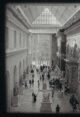
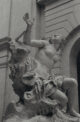
I had a roll of film I never used before — a black and white stock of ILFORD, 3200 ISO. This ‘fast’ film type produces a heavy, prominent texture of a physical silver grain, which meant statues were a good subject; the light falls differently on the angular shapes, on the serpentine bodies, illuminating varied tones. Black and white film tends to be forgiving, to soften the contrast, and yet I wanted to ‘pull’ the film as much as possible, a full two stops if I could. Surrounded by artifacts that transcended time and place, I wanted to stretch the film. Above all, I did not want summer to end. I am just a cliché, aren’t I? But I meant it. It was August, you were leaving at the end of it.

“I want to say, this is how much I miss you. Look how the light falls here.”
I have the photos from that day in front of me now. I can remember it clearly. I see the sky was clear; a cluster of clouds only here and there, amidst this paleness, like slate. I see the museum was crowded, as it usually is during the high season. I see the white collared shirt you wore that caught the light every time we walked under a skylight, and the flicker of gold from the necklace that was your mom’s when she was your age.
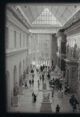
We got lost in the museum hallways before finding our way to the sculpture court. At first, we saw them from a distance, from the floor above: specks of brightness all lined up, and people looking small moving all around them. Arriving at the gallery, the statues were mythological not just in theme, but in scale. They stretch out, reaching high, reaching wide. Some were once placed in palaces, some in royal gardens. Immune to time, they have seen things we haven’t. Up close, they reveal a different kind of beauty. Film can capture that, I thought. It transfixes. Holds still. Film feels tactile, shadows and highlights are clearer. Objects are brighter, luminous, sharper. I used to think black and white simplifies, but there are more undertones, more shades of white, and black is multifaceted, almost granular. There are layers and layers and if I try to distill them, I can’t.
Memory works the same way, like a maze of perspectives. There is the original memory, the actual happening, and then there are the times of remembrance. Each time you remember something more; each time it accumulates additional layers of meaning. They say the more you try to remember, the more you alter what actually happened. Our minds being malleable as they are, memory becomes elusive, saturated, inevitably tainted with the present self that is now looking back. Lately I’ve been thinking of the kitchen in my childhood home. Trying to remember which cabinets were for which pots. Where the toaster was. Trying to place objects where they belonged, as if accuracy might restore what time has already altered. When I think of my old house it always has people in it. Coming and going, the front door is never locked. Or thinking of our intercom by the front gate — we used to ring it just for fun, take turns who answered. At times the front gate would be locked so I’d climb and wiggle my way in through the gap at the top. I forget until what age I was able to fit. On some days I used to pick up the intercom just to listen to the outside street. It was mostly static. Still, I’d press it to my ear and listen. Spaces preserve life differently. Your existence can become tied to a place. An object. A person.
“Spaces preserve life differently. Your existence can become tied to a place. An object. A person.”
In the museum, I remember you walking ahead, patiently waiting for me to load the film, adjust the settings to the light. You being, always, forever patient, present. All this talk about memory, I don’t want to overthink or overanalyze. I want to find faith in something, to let things flow freely. I am interested in what remains.
Another art-related memory with you comes to mind. It’s 2015, New York again. We were in Chelsea this time, and in the museum store there was this book. The title escapes me now except we all thought it was endearing. It had something to do with encouraging people to talk about art, whether viewing it in person, in a photo, or on-screen. One of the chapters suggested that if you miss someone you should call them and describe the artwork you’re seeing. I want to call. I want to say, this is how much I miss you. Look how the light falls here.